Peter Bubestinger-Steindl
(peter @ ArkThis.com)
October 2022
| Video | Audio |
|---|---|
|
|
| Pixel (px) | Norm |
|---|---|
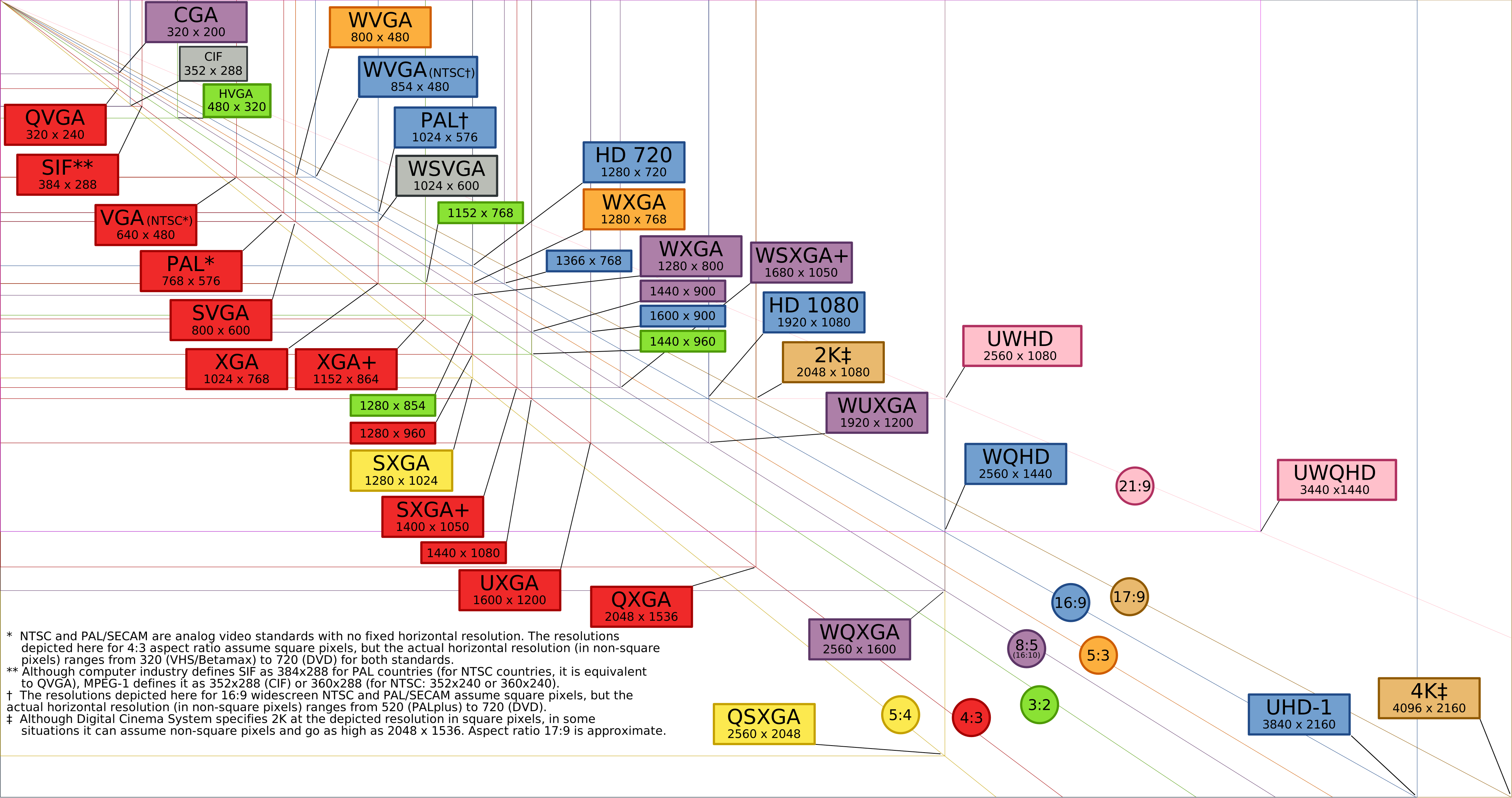
| 720 x 486 | NTSC SD |
| 720 x 576 | PAL SD |
| 1280 x 720 | HD-Ready |
| 1920 x 1080 | Full-HD |
| 2048 x 1080 | 2K (Digital Cinema) |
| 4096 x 2160 | 4K (Digital Cinema) |
See also: Image Resolution (Wikipedia) and Display Resolution (Wikipedia)
| Pixel (px) | Norm |
|---|---|
| 500 x 480 | Digital8 |
| 720 x 480 | NTSC (DVD, miniDV, DigiBeta) |
| 720 x 576 | PAL DVD, miniDV, Digital8, DigiBeta |
| 1280 x 720 | HD DVD, Blu-ray, HDV |
| 1440 x 1080 | HDV (anamorph) |
| 1920 x 1080 | HDV, AVCHD, HD DVD, Blu-ray, HDCAM SR |
| 3840 x 2160 | UHD-1 |

| Norm | Framerate |
|---|---|
| PAL / SECAM | 25 fps |
| NTSC | ca. 29.97 fps (= 30000/1001) |
| Film | 24 fps |
| Film (NTSC) | ca. 23.98 fps (= 24000/1001) |
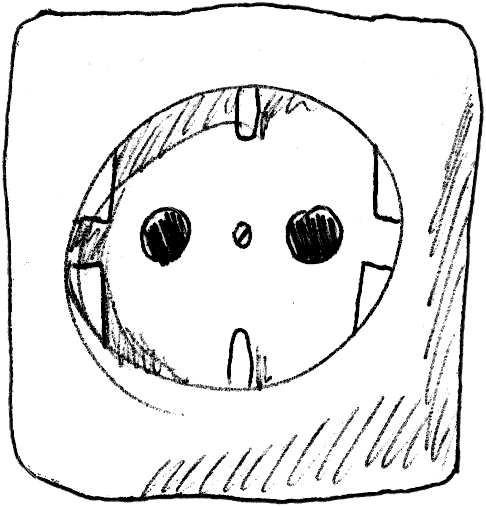
fps = AC frequency / 2
Thanks AEG for 50Hz! 😉️
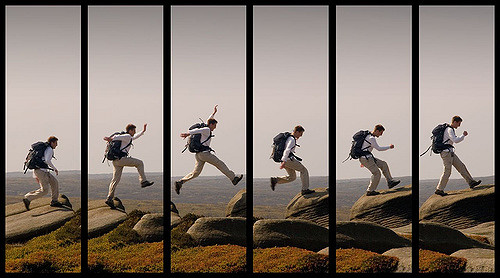
Each frame has a fixed (=constant) duration. 
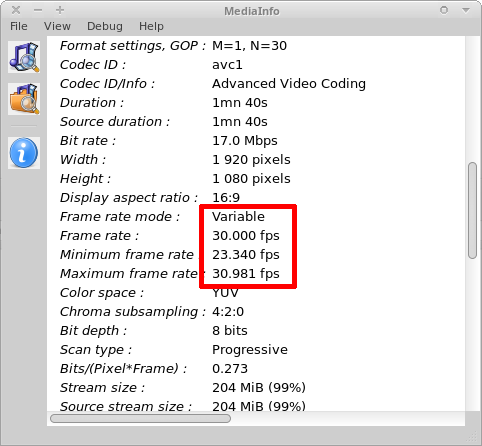
Each frame has an arbitrary (=variable) duration. 
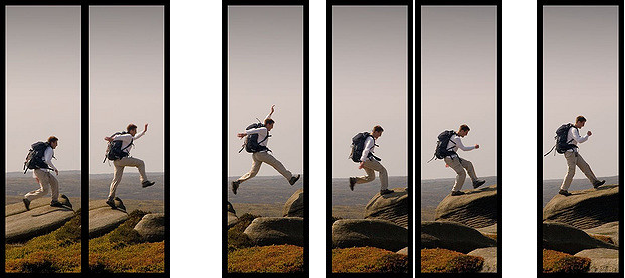

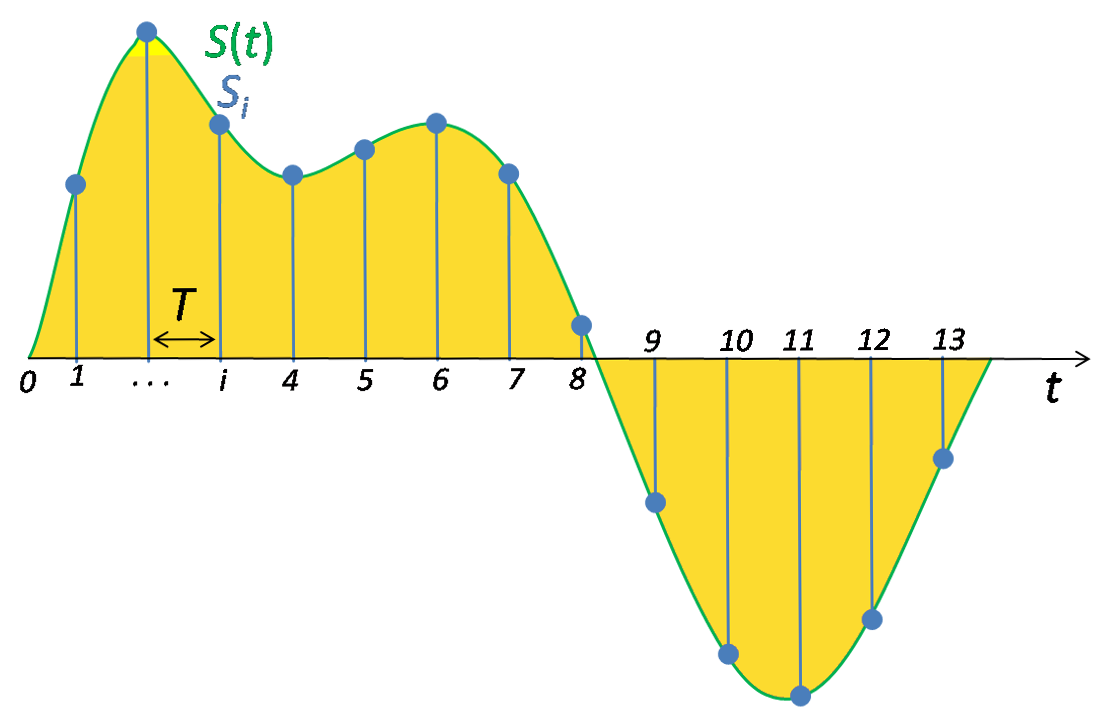
Samplerate is given as frequency:
1 kHz (Kilohertz) = 1000 Hz (Hertz)
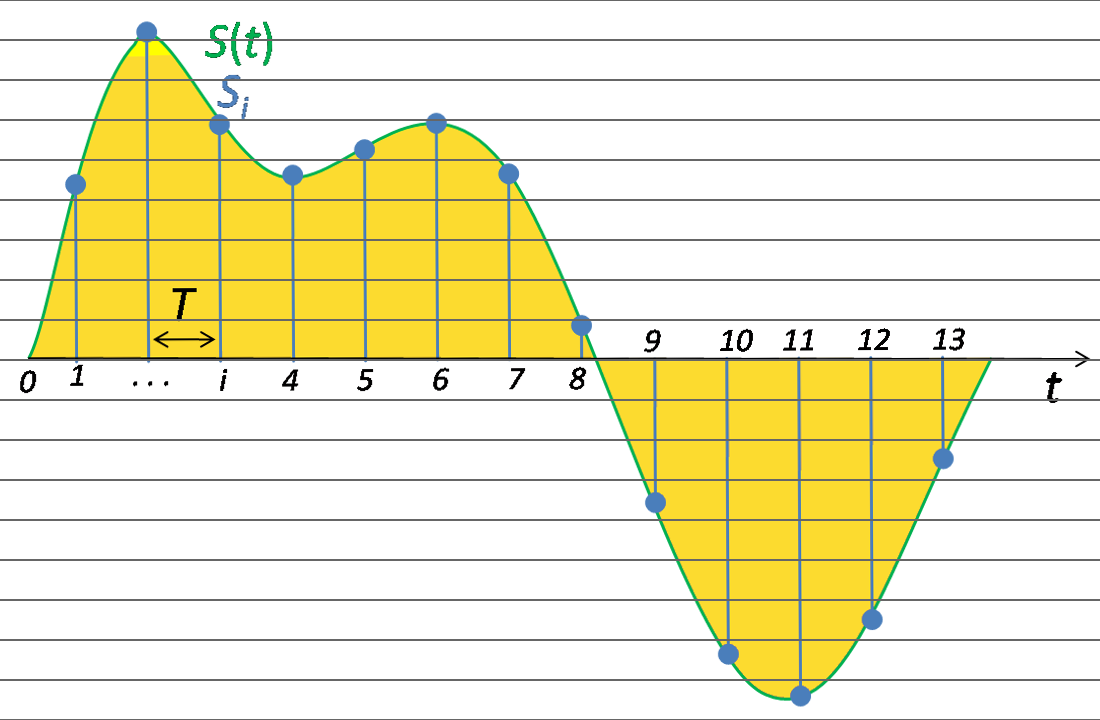
Each audio sample is literally just a number. Representing the audio volume (voltage) at that position.
Example Audio CD:
44.1 kHz = 44100 samples per second

| Bits | Range |
|---|---|
| 4 | 0..15 |
| 8 | 0..255 |
| 16 | 0..65535 |
| 24 | 0..16777216 16.7 Mio |
| 32 | 0..4294967296 (a lot!) |
filesize (MB) = bits * samplerate * channels * duration / 8 / 1024 / 1024
| Rate (Hz) | Bits | Application |
|---|---|---|
| 11025 | 8 | ![]() |

| 44100 | 16 | |
| 48000 | 24 | ![]() |
| 96000 | 32 | ![]() |
Preserve, and/or document the source track/channel layout.
Audio channel mapping is another story…
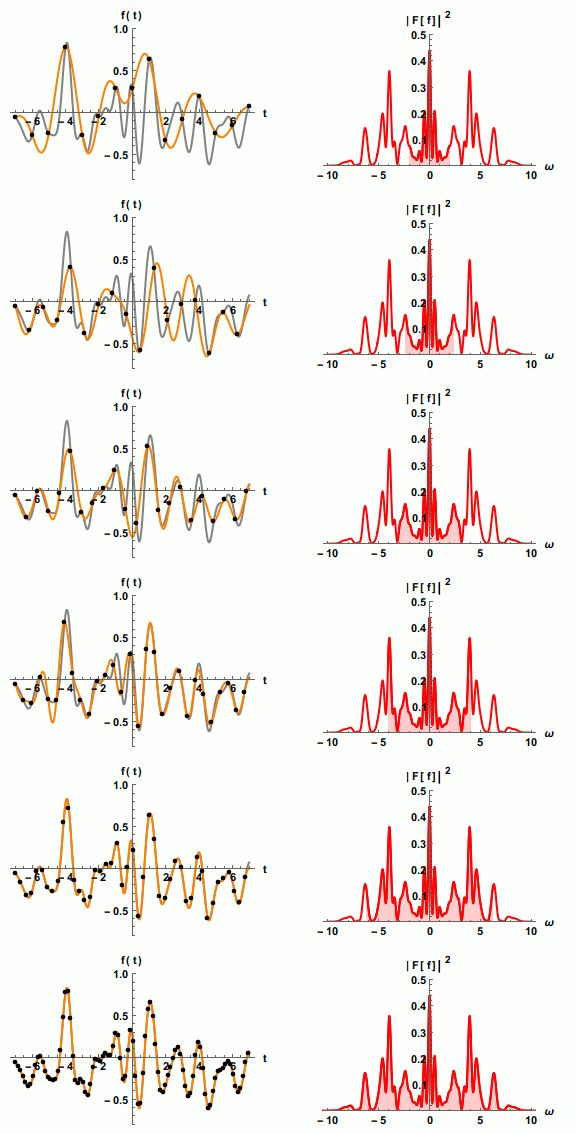
“Sufficient” samplerate = 2*max(f) (at least) twice the highest frequency of to-be-sampled content.
(See Nyquist–Shannon sampling theorem)