Topic 3 - Introduction to the OAIS Reference Model
Open Archival Information System
ISO 147214:2012

The Graph
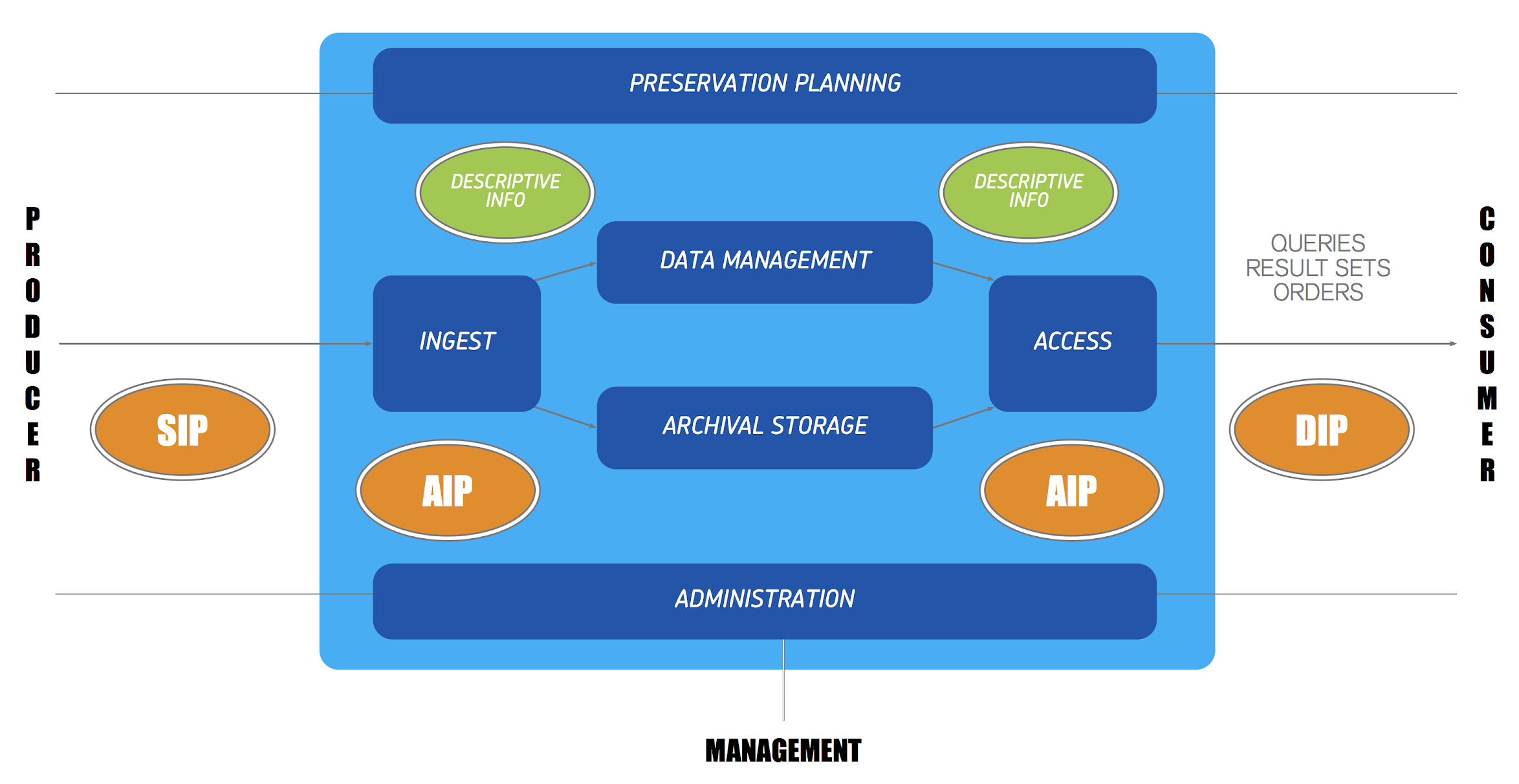
Mandatory responsibilities
- Negotiate & accept appropriate information.
- Obtain sufficient control over the information.
- Determine scope of community needs.
- Ensure the preserved info is understandable independently without assistance.
- Safeguard your items (contingencies, deletions, …)
- Make it available.
The 3 Areas of Operation
External environment
producer, consumer, and managementFunctional components
of the repository itselfInformation packages
being preserved and disseminated
Locate the 3 Areas
Information Objects
“[are] either a physical or digital Data Object with Representation Information that ‘allows for the full interpretation of data into meaningful information’” — ImpactZone
Information Object Packages
SIP, AIP, DIP
SIP:
Submission Information PackageAIP:
Archival Information PackageDIP:
Dissemination Information Package
Find the Information Packages
Information Objects
“[are] either a physical or digital Data Object with Representation Information that ‘allows for the full interpretation of data into meaningful information’” — ImpactZone
Representation Information
Examples? Ideas?
Representation Information
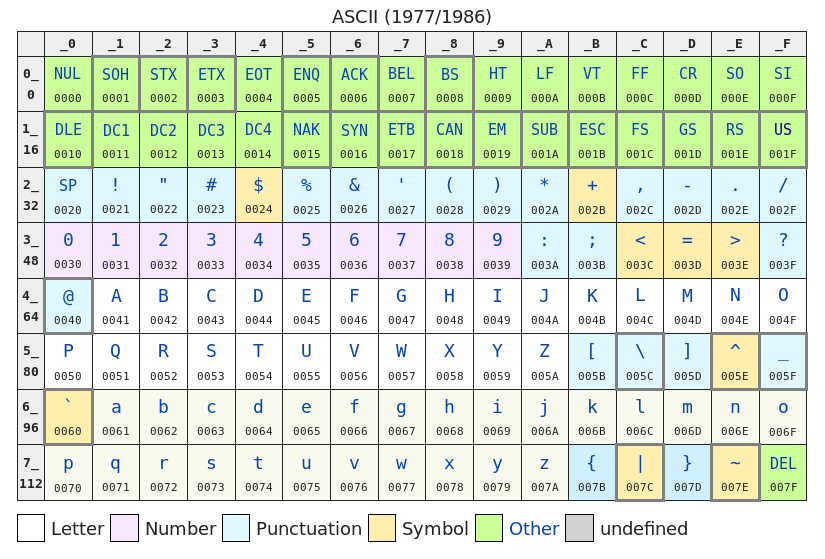
Representation Information
…for images, audio, video?
Representation Information
So, what could you store alongside your files?
It’s a recursion.
Digital Representation Information is an Information Object that may have its own Data Object and its own Representation Information associated with understanding each Data Object.
…meaning:
|

|
Information Types
- Semantic
- Structure
- Other
Information Types
Semantic
Example: Text, but which language?Structure
Example: File format definition
(header, payload, …)Other
None of the above ;)
Example: Which software required
Common misunderstandings
- You don’t have to implement OAIS,
but it’s a good reference. - There’s no “common format” for SIPs, AIPs, DIPs. but there are good/best practices
- It doesn’t have to involve XML
…or a specific metadata standard.
(but it also doesn’t hurt ;P) - Perfect can be the enemy of good
(Aim for a sweet spot!) - Don’t assume “it’s clear to everyone” WHO your designated users are.
OAIS Background
The Consultative Committee for Space Data Systems (CCSDS) initiated work aimed at developing formal standards for the long-term storage of digital data generated from space missions.
The OAIS reference model was approved in January 2002 as ISO International Standard 14721;
a revised and updated version was published in 2012 as ISO Standard 14721:2012.
Design and revisions have taken place concurrent and in partnership with the growth of the profession into one that has boundaries, curricula, and standards of practice.
OAIS Background
For a type of archive consisting of an organization of people and systems that has accepted the responsibility to preserve information for one or more designated communities.
A reference model = an abstract framework or domain-specific ontology consisting of an interlinked set of clearly defined concepts produced by an expert or body of experts in order to encourage clear communication.
Strictly a conceptual framework.
Sets the standard for the activities that are involved in preserving a digital archive rather than the method for carrying out those activities
Links
- OAIS Reference Model (ImpactZone)
- The OAIS and the NSSDC (National Space Science Data Center)
- Preservation Metadata and the OAIS Information Model
- Open Archival Information System (Wikipedia)
Comments?
Questions?